


Lichen sclerosus (LS) is a chronic inflammatory skin condition that most often affects the genital and anal areas. It can cause itching, irritation, soreness, changes in skin color and texture, and—when untreated—scarring or changes in the affected anatomy.
Understanding what is lichen sclerosus, what causes it, and the available lichen sclerosus treatment options can help people recognize the condition and seek appropriate medical care.
Medical Disclaimer: This article is for educational purposes only. It does not provide medical advice, diagnosis, or treatment recommendations. Anyone with suspected or diagnosed lichen sclerosus should consult a qualified healthcare professional.
What Is Lichen Sclerosus?
Lichen sclerosus is a chronic inflammatory skin disease that can make affected skin appear pale, thin, fragile, or irritated. It most commonly occurs around the vulva and anus in women, but it can also affect the penis and foreskin in men and, less commonly, other areas of the body.
LS is not a sexually transmitted infection (STI) and is not caused by poor hygiene. It is also not contagious, meaning it cannot be transmitted to another person through sexual contact.
The exact cause is not completely understood, but research suggests that immune-system dysfunction may play an important role.
Common symptoms of lichen sclerosus
Symptoms can vary considerably. They may include:
- Persistent itching
- Burning or irritation
- White or lighter-colored patches
- Soreness or pain
- Fragile skin that bruises or tears easily
- Small cracks or bleeding
- Pain during sexual activity
- Changes in the appearance or structure of the genital area
- Tightening of the foreskin in some men
Some people have significant symptoms, while others may have very few noticeable symptoms.
What Causes Lichen Sclerosus?
The question “what causes lichen sclerosus?” does not currently have one definitive answer.
Researchers believe LS may develop through a combination of factors rather than a single cause.
Possible contributing factors include:
Immune-system dysfunction:
Evidence increasingly suggests that abnormal immune activity may contribute to inflammation and tissue changes associated with LS.
Genetic susceptibility:
Some individuals may have a genetic tendency that makes them more susceptible to developing autoimmune or inflammatory conditions.
Hormonal factors:
Hormonal changes may influence LS in some people, although hormones alone do not explain the condition.
Local skin and environmental factors:
Irritation, friction, moisture, and other local factors may influence symptoms or disease activity in some individuals.
It is important to emphasize that lichen sclerosus is not caused by sexual activity, poor hygiene, or an STI.
Lichen Sclerosus Treatment
The appropriate lichen sclerosus treatment depends on the location and severity of the disease, symptoms, scarring, and individual circumstances.
For genital LS, high-potency topical corticosteroids are widely considered the standard first-line medical treatment. A healthcare professional can provide instructions regarding the appropriate medication, amount, application technique, and treatment schedule.
Treatment generally has several goals:
- Control inflammation
- Reduce itching, burning, and pain
- Protect fragile skin
- Prevent or limit scarring
- Preserve normal anatomy and function
- Reduce complications
- Maintain long-term disease control
Topical corticosteroids
A commonly used medication is clobetasol propionate, an ultrapotent topical corticosteroid.
It can be highly effective when used correctly under medical supervision. Treatment is often followed by a maintenance strategy because LS can be chronic and may become active again after symptoms improve.
Patients should not start, stop, or change the frequency of a potent corticosteroid without discussing it with their healthcare professional.
Other Lichen Sclerosus Treatments
Although topical corticosteroids remain an important part of established LS management, researchers and clinicians are investigating additional treatment approaches.
Depending on the individual case, healthcare professionals may consider or investigate:
Topical calcineurin inhibitors
Medications such as tacrolimus or pimecrolimus may sometimes be considered, particularly when corticosteroids are unsuitable or as an alternative treatment approach.
Pain and symptom management
Managing discomfort is also an important part of living with LS. Treatment may include appropriate skin care, avoidance of irritants, lubricants for sexual activity, and treatment directed at the underlying inflammation.
Hormonal treatments
Hormonal products may have a role in treating certain coexisting conditions or symptoms, but they should not automatically be considered a primary treatment for LS itself.
Advanced and emerging therapies
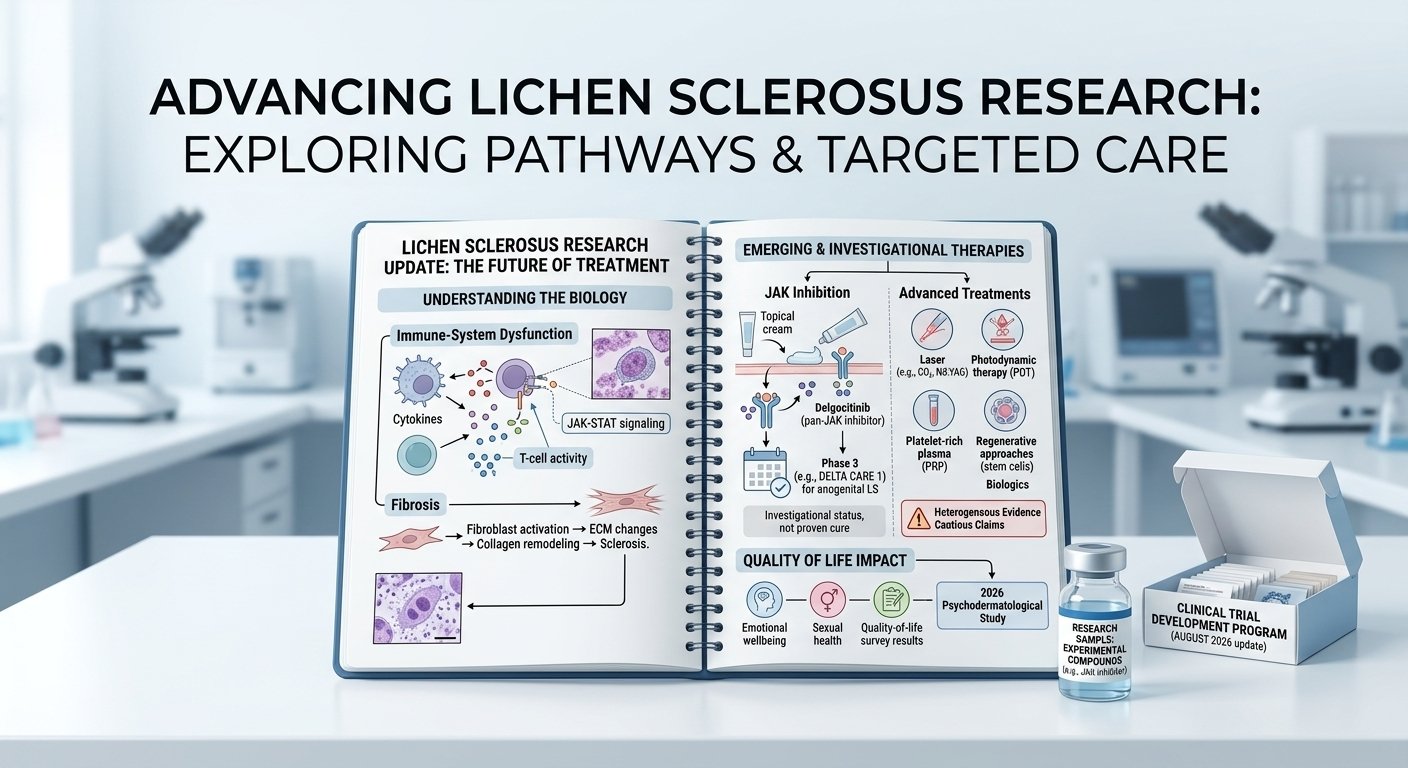
Researchers are studying several newer approaches, including:
- JAK inhibitors
- Biologic therapies
- Laser-based treatments
- Phototherapy
- Photodynamic therapy
- Platelet-rich plasma (PRP)
- Regenerative approaches
- Other immune-targeted treatments
However, not all of these treatments have the same level of scientific evidence, and many remain investigational. Patients should be cautious about claims that an emerging therapy is a proven cure.
How to Treat Lichen Sclerosus
If you are wondering how to treat lichen sclerosus, the first step is obtaining an appropriate medical diagnosis.
Because several other skin conditions can resemble LS, self-diagnosis can be unreliable.
A healthcare professional may assess:
- Your symptoms and medical history
- The appearance of the affected skin
- The location and extent of the condition
- Whether there is evidence of scarring or architectural changes
- Your response to treatment
In some situations, a skin biopsy may be recommended when the diagnosis is uncertain or when a particular area needs further evaluation.
A practical approach to LS management
A long-term management plan may include:
1. Confirm the diagnosis
Work with a qualified healthcare professional who is familiar with LS.
2. Treat active inflammation
Use prescribed treatment according to your clinician’s instructions.
3. Follow maintenance care
LS can be chronic, so improvement does not necessarily mean the condition has permanently disappeared.
4. Protect the skin
Avoid unnecessary friction, harsh soaps, fragrances, and other products that irritate sensitive skin.
5. Monitor changes
Pay attention to new sores, persistent ulcers, lumps, thickened areas, bleeding, or other changes.
6. Attend follow-up appointments
Long-term monitoring can help detect recurrence, scarring, treatment problems, or concerning changes.
Lichen Sclerosus in Women and Men
Although LS is frequently discussed in relation to vulvar disease, lichen sclerosus can affect both women and men.
In women
LS commonly affects the vulva and surrounding skin. Symptoms can include itching, burning, soreness, tearing, and changes in vulvar anatomy.
Scarring can sometimes cause narrowing or fusion of structures and may affect sexual activity or urination.
In men
LS may affect the foreskin and glans of the penis. Some men develop tightening of the foreskin, making retraction difficult or painful.
Medical assessment is important because treatment needs can differ depending on the location and severity of the disease.
Can Lichen Sclerosus Be Cured?
At present, there is no universally established treatment that permanently eliminates lichen sclerosus in every patient.
However, LS can often be controlled effectively.
Treatment can reduce inflammation and symptoms and may help prevent or limit progressive scarring and structural changes.
This is why early diagnosis and long-term management are important.
Research is continuing to investigate treatments that could more specifically target the immune pathways involved in LS.
Lichen Sclerosus and Long-Term Health
LS is more than a short-term skin irritation. For some people, it can become a long-term condition requiring continuing care.
Untreated or poorly controlled disease may contribute to:
- Persistent itching and discomfort
- Skin tearing
- Scarring
- Changes in genital anatomy
- Sexual discomfort
- Urinary problems
- Emotional distress and reduced quality of life
There is also an increased risk of vulvar squamous cell carcinoma in people with vulvar LS. The absolute risk for an individual is still relatively low, but new or persistent suspicious skin changes should be evaluated promptly by a healthcare professional.
Lifestyle and Skin-Care Considerations
Medical treatment is central to LS management, but everyday skin care can also make a difference in comfort.
Helpful general practices may include:
- Using gentle, fragrance-free products
- Avoiding harsh soaps and unnecessary irritants
- Wearing breathable clothing
- Reducing friction
- Keeping the affected area comfortable and dry
- Using appropriate lubrication during sexual activity
- Following the treatment plan prescribed by your clinician
Diet and supplements are sometimes discussed in relation to LS. However, there is currently no established diet that can reliably cure lichen sclerosus. Dietary changes should not replace evidence-based medical treatment.
What Does the Future of Lichen Sclerosus Treatment Look Like?
Lichen sclerosus research is moving toward a better understanding of the immune pathways and tissue-remodeling processes involved in the disease.
Researchers are investigating pathways involving cytokines, T-cell activity, JAK-STAT signaling, and other immune mechanisms.
One particularly interesting area is topical JAK inhibition, including research into delgocitinib for LS. Because these treatments are still being studied, their ultimate role in routine LS care will depend on clinical-trial results, regulatory decisions, and long-term safety data.
Other areas of research include laser therapies, photodynamic therapy, regenerative approaches, biologics, and potential anti-fibrotic strategies.
The goal of future research is not simply to control itching and inflammation, but potentially to better understand—and eventually prevent—the tissue remodeling and scarring associated with LS.
Frequently Asked Questions About Lichen Sclerosus
Is lichen sclerosus contagious?
No. Lichen sclerosus is not contagious and is not considered an STI.
What causes lichen sclerosus?
The exact cause remains uncertain. Immune-system dysfunction, genetic susceptibility, hormonal factors, and local environmental influences may all contribute.
What is the most common lichen sclerosus treatment?
For genital LS, high-potency topical corticosteroids such as clobetasol are widely used as first-line treatment under medical supervision.
How do you treat lichen sclerosus?
Treatment usually involves medical assessment, prescribed anti-inflammatory therapy, ongoing skin care, symptom management, and long-term monitoring. The appropriate treatment depends on the individual.
Can lichen sclerosus go away?
Symptoms can improve substantially with treatment, but LS is generally considered a chronic condition. Continued monitoring and maintenance treatment may be necessary.
Can lichen sclerosus affect sex?
Yes. Pain, irritation, fragile skin, dryness, and scarring can make sexual activity uncomfortable for some people. Proper disease control and appropriate communication with a healthcare professional can help address these issues.
Final Thoughts
Lichen sclerosus is a manageable but chronic inflammatory skin condition that deserves proper diagnosis and long-term attention. Understanding what is lichen sclerosus, recognizing its symptoms, knowing what causes lichen sclerosus, and understanding available lichen sclerosus treatments can help people make informed decisions about their health.
If you suspect you have LS, do not rely solely on online information or self-treatment. Seek evaluation from a qualified healthcare professional.
For a deeper educational resource covering lichen sclerosus treatment, sexual health, pregnancy and delivery, emerging therapies, medical research, self-care, and healing, explore The Lichen Sclerosus Guidebook.
The 2025 Edition was published in June 2025 and is available in both print and Kindle formats.The print edition contains 185 pages and has the ISBN-13 979-8218674397. The Kindle edition contains approximately 145 pages and supports features including screen-reader accessibility and enhanced typesetting.Available on Amazon