


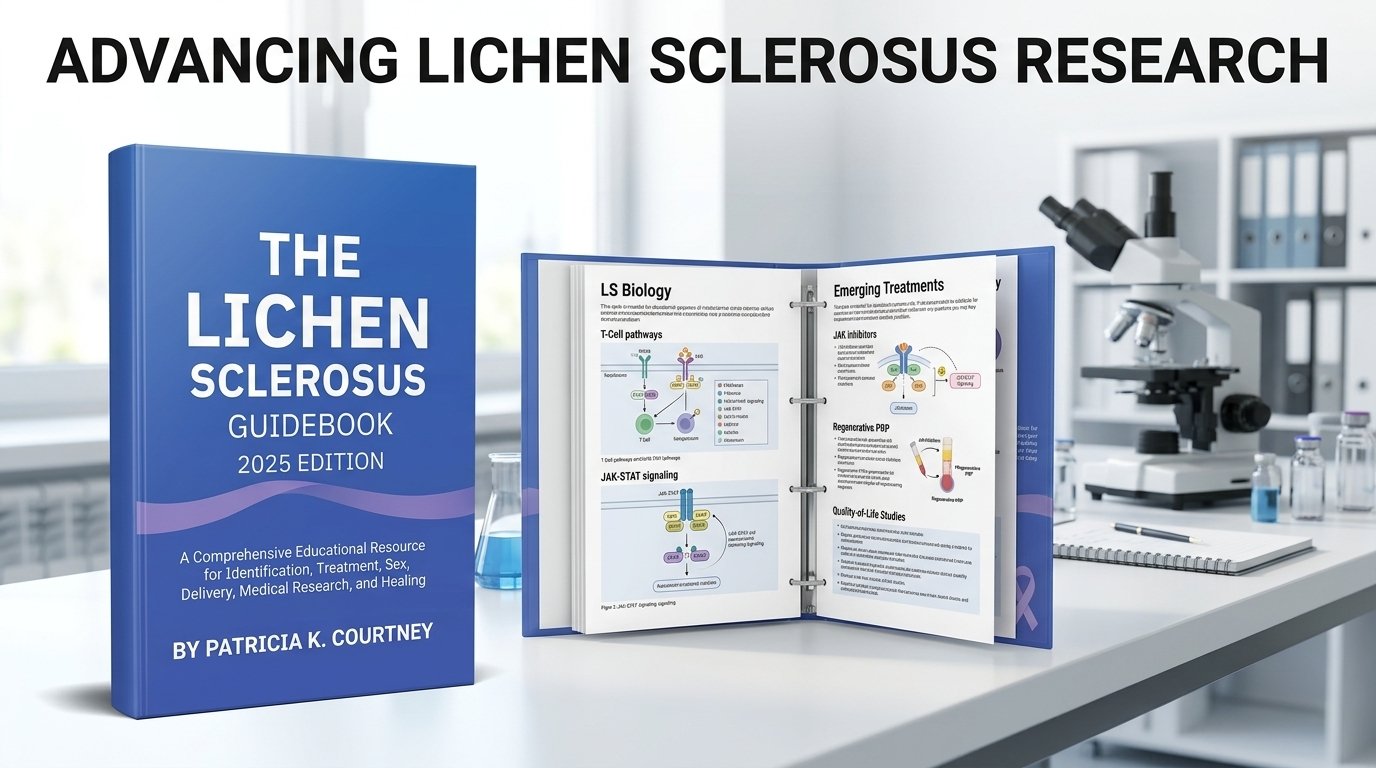
Lichen Sclerosus Medical Research: New Discoveries and Emerging Treatments
Research Update: August 2026. This page is periodically updated as new clinical trials, systematic reviews, guidelines and peer-reviewed research become available.
Exploring New Discoveries, Emerging Therapies, and the Future of LS Treatment
Research into Lichen Sclerosus is changing our understanding of the disease.
For many years, LS was primarily approached as a chronic inflammatory skin disorder requiring long-term symptom and inflammation control. Modern research is increasingly examining the immune pathways, cytokines, cellular signaling, fibrosis, extracellular-matrix remodeling, and genetic and molecular factors that may contribute to disease development and progression.
This research could eventually lead to more targeted and individualized treatments.
Understanding the Biology of Lichen Sclerosus Disease
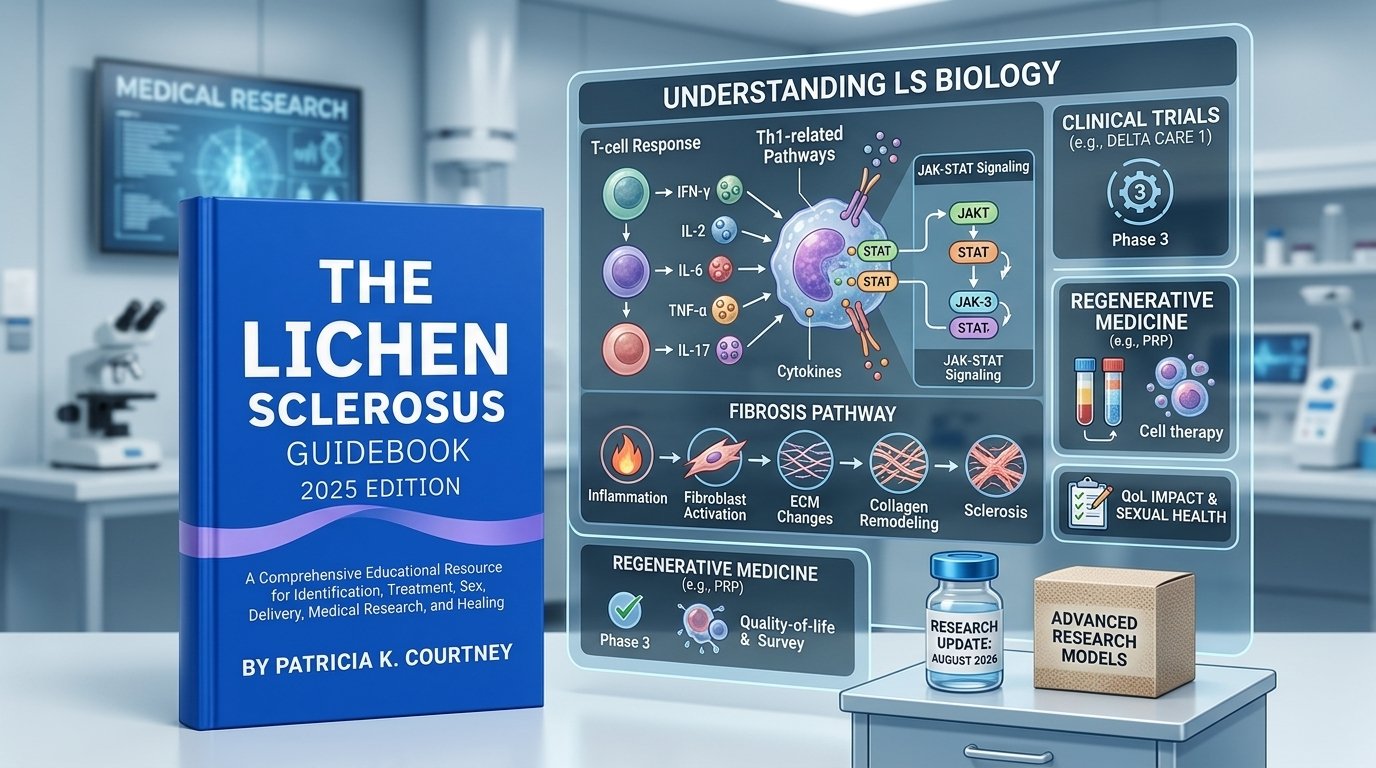
Researchers are studying how immune cells and inflammatory signaling contribute to LS.
Areas of interest include:
- T-cell responses
- Th1-related immune pathways
- Interferon-γ
- IL-2
- IL-6
- TNF-α
- IL-17
- JAK-STAT signaling
- microRNA pathways
- ECM1-related mechanisms
- Fibroblast activation
- Collagen and extracellular-matrix remodeling
The goal is to understand not only what LS looks like, but why the disease develops and how inflammation may lead to long-term tissue changes.
JAK-STAT Research in Lichen Sclerosus Treatment
One of the most closely watched areas is the JAK-STAT pathway.
JAK inhibitors have been investigated in several inflammatory and autoimmune conditions, and researchers are now studying whether this pathway can be therapeutically targeted in Lichen Sclerosus.
A 2025 systematic review identified promising early evidence involving JAK inhibitors such as baricitinib and abrocitinib, while emphasizing the need for stronger randomized controlled trials.
This is an important distinction: Promising research is not the same as established treatment.
Delgocitinib and Phase 3 Research
One of the most significant current developments is the clinical investigation of delgocitinib cream, a topical pan-JAK inhibitor.
A Phase 3 clinical trial, DELTA CARE 1, is investigating delgocitinib in adults with anogenital Lichen Sclerosus.
This represents an important transition from small preliminary studies toward a larger pharmaceutical clinical-development program.
However, trial participation and investigational status do not mean that the medication has already been proven to work for LS.
The results of the trial will be important in determining whether delgocitinib could eventually become part of routine LS treatment.
Laser and Photodynamic Therapy for Vulvar Lichen Sclerosus
Laser treatment continues to be studied as another possible approach.
Researchers have investigated CO₂ laser, Nd:YAG laser, Er:YAG laser and other technologies.
Photodynamic therapy (PDT) is also being investigated, including studies involving 5-aminolevulinic acid.
A 2026 study of PDT in refractory vulvar LS reported improvements in quality of life and sexual-function measures. However, research remains ongoing, and these approaches should not currently be presented as universal replacements for standard medical therapy.
Regenerative Medicine and Emerging Lichen Sclerosus Treatments
PRP, fat grafting, stem-cell approaches, exosomes and other regenerative therapies are attracting interest.
Some studies have reported improvements in symptoms or quality-of-life measures, but the evidence remains heterogeneous.
For this reason, claims that regenerative therapies can cure or permanently reverse LS should be approached cautiously.
More controlled clinical trials are needed.
Fibrosis and Tissue Remodeling in Lichen Sclerosus Disease
Another important research question concerns the relationship between inflammation and fibrosis.
Researchers are investigating how chronic immune activation may contribute to:
Inflammation → fibroblast activation → extracellular-matrix changes → collagen remodeling → sclerosis and architectural changes
Understanding this process could eventually lead to therapies aimed not only at suppressing inflammation but also at preventing or modifying structural tissue changes.
Quality of Life Is Also an Important Research Area
LS research is increasingly recognizing that the disease affects much more than the skin.
Recent research has found relationships between symptoms, sexual dysfunction, anxiety, psychological distress and quality of life. A 2026 psychodermatological study found that symptom severity and psychological factors were closely associated with quality-of-life impairment.
This supports a broader approach to LS care that considers physical, sexual and emotional wellbeing.
The Future of Lichen Sclerosus Research and Treatment
The future may involve more personalized treatment based on:
- Disease severity
- Immune pathways
- Biomarkers
- Fibrotic changes
- Individual treatment response
- Quality-of-life impact
The ultimate goal is not simply to suppress symptoms.
Researchers hope to better understand the disease mechanisms and develop treatments that can control inflammation, prevent progression, reduce scarring and potentially address long-term tissue remodeling.
Follow the Research
The Lichen Sclerosus Guidebook follows developments in LS research to help readers understand what is established, what is promising, and what remains experimental.
Medical research moves quickly. Always discuss new treatments with a qualified healthcare professional before considering them.