


Living with Lichen Sclerosus requires more than managing symptoms. Long-term care involves following an appropriate treatment plan, attending medical reviews, monitoring skin changes, and understanding when new symptoms require professional assessment.
Lichen sclerosus (LS) is a chronic inflammatory skin condition that can affect the genital and non-genital skin. Although symptoms may improve with treatment, the condition can remain active or return after a period of improvement. Regular follow-up helps healthcare professionals assess treatment response, identify complications and support long-term disease control.
For people living with lichen sclerosus, understanding what to monitor and how to maintain consistent care can make a meaningful difference in managing the condition.
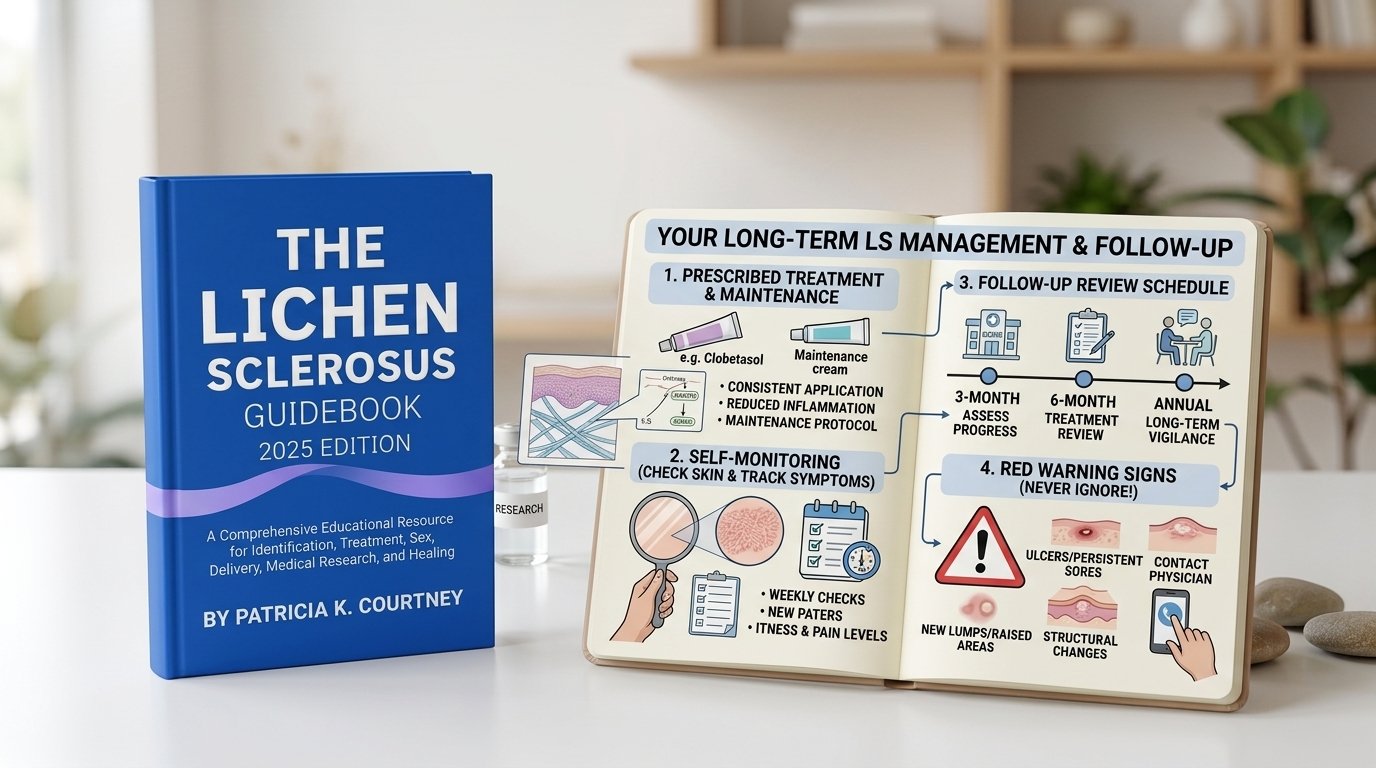
What Does Long-Term Management of Lichen Sclerosus Involve?
Long-term management of lichen sclerosus focuses on controlling inflammation, relieving symptoms, reducing the risk of scarring and identifying concerning skin changes.
A comprehensive management plan may involve:
- Following the prescribed treatment regimen.
- Attending recommended medical follow-up appointments.
- Monitoring changes in affected skin.
- Avoiding products that irritate sensitive skin.
- Discussing sexual health, urinary symptoms and quality-of-life concerns with a healthcare professional.
- Seeking medical assessment when symptoms change or treatment becomes less effective.
The appropriate management plan depends on the affected area, disease severity, individual symptoms, treatment response and medical history.
Importantly, improvement in symptoms does not always mean that the underlying inflammation is completely inactive.
Does Lichen Sclerosus Require Long-Term Monitoring?
Yes. Long-term monitoring is an important part of managing lichen sclerosus.
LS can cause persistent inflammation and, in some people, progressive skin changes or scarring. Even when symptoms improve, healthcare professionals may recommend ongoing assessment to ensure that the condition remains controlled.
According to the British Association of Dermatologists’ guidelines, follow-up should assess treatment response, confirm disease control and provide advice about long-term management.
The frequency of follow-up varies depending on individual circumstances.
People with uncomplicated disease that responds well to treatment may need less frequent specialist appointments. Those with persistent symptoms, atypical changes, previous complications or uncertain diagnoses may require closer specialist monitoring.
How Often Should Lichen Sclerosus Be Checked?
There is no single follow-up schedule that is appropriate for everyone.
The British Association of Dermatologists’ 2018 management guideline provides suggested follow-up pathways for different patient groups.
For example:
- Initial review: Often around three months after starting treatment to assess response and check whether medication is being used correctly.
- Further assessment: A subsequent review may be recommended approximately six months later, depending on the patient’s progress.
- Ongoing monitoring: Some individuals may benefit from annual reviews or more frequent appointments, depending on disease activity and clinical findings.
These are guideline-based examples, not a universal schedule. Your healthcare professional should determine the appropriate follow-up plan.
Children, people with persistent disease and individuals with atypical or concerning skin changes may need specialist follow-up.
How to Monitor Lichen Sclerosus at Home
Self-monitoring can help people recognize changes between medical appointments. It does not replace a professional examination, but it can help identify symptoms that deserve further assessment.
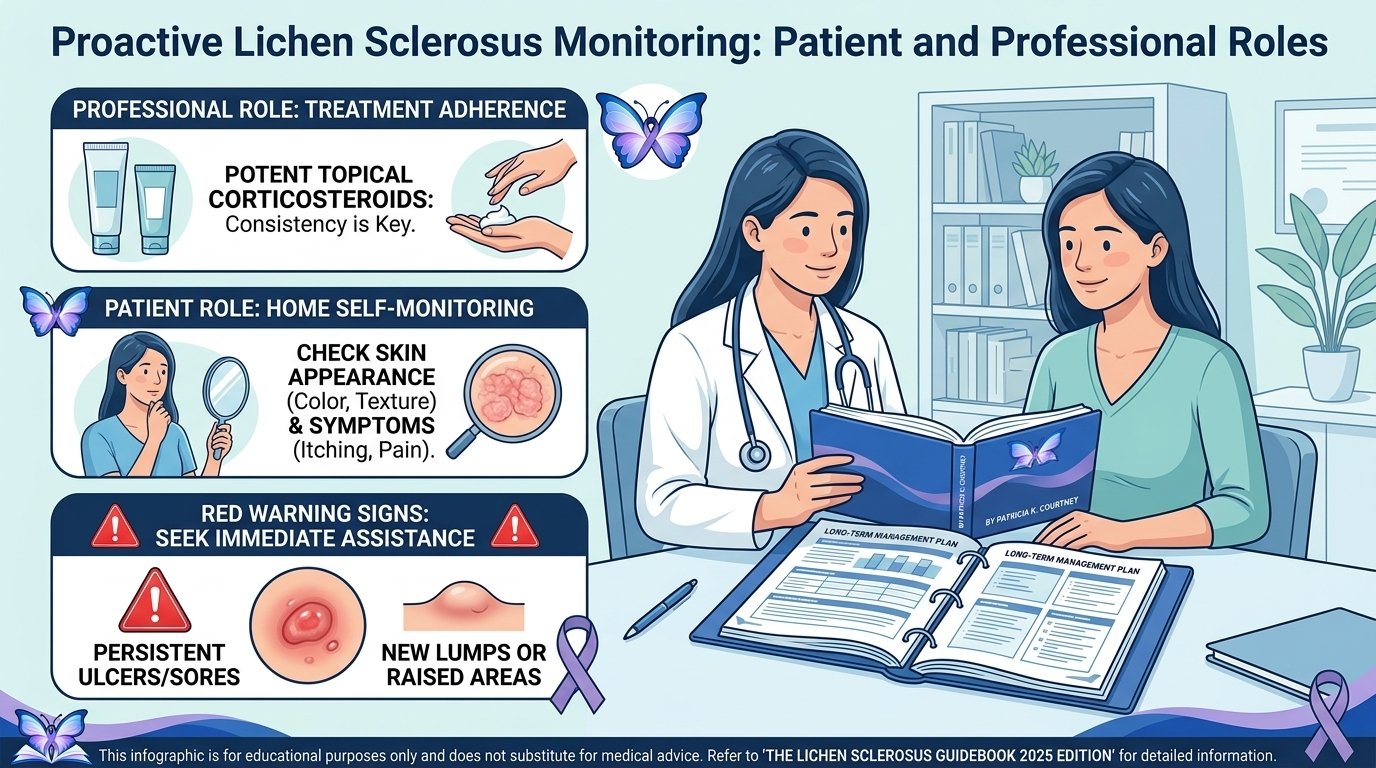
Consider monitoring the following:
1. Changes in Skin Appearance
Pay attention to changes in the affected skin, including:
- New or increasing white patches.
- Thickened or hardened areas.
- New bruising or fragile skin.
- Persistent redness.
- New erosions or ulcerated areas.
- Changes in the structure or appearance of affected genital skin.
Not every change indicates a serious complication. However, persistent or unexplained changes should be assessed by a healthcare professional.
2. Changes in Symptoms
Keep track of symptoms such as:
- Persistent itching.
- Burning or irritation.
- Skin tenderness.
- Pain during sexual activity.
- Discomfort when urinating.
- Increasing sensitivity or soreness.
A symptom diary can help identify patterns and provide useful information during medical appointments.
3. Changes in Sexual or Urinary Function
Lichen sclerosus can affect sexual comfort and urinary function, particularly when genital skin becomes inflamed, scarred or structurally altered.
Discuss symptoms such as painful intercourse, skin tightness, difficulty retracting the foreskin, changes in the urinary stream or difficulty passing urine with an appropriate healthcare professional.
These concerns deserve medical attention rather than being treated as unavoidable consequences of the condition.
What Warning Signs Should People with Lichen Sclerosus Never Ignore?
Although most skin changes associated with LS are not cancerous, people with genital lichen sclerosus have an increased risk of developing certain types of skin cancer, particularly squamous cell carcinoma.
The risk is not the same for everyone, and appropriate treatment and monitoring are important.
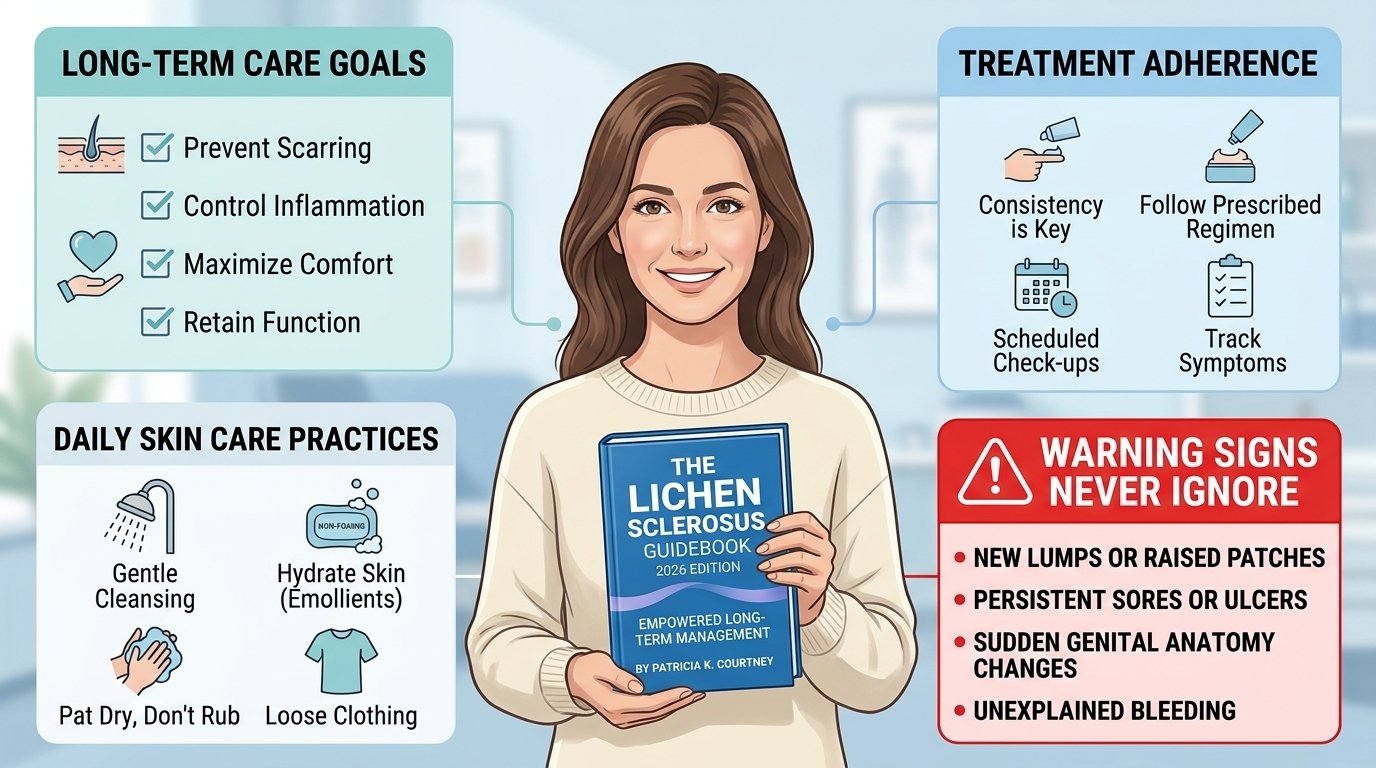
Seek prompt medical assessment if you notice:
- A persistent ulcer or open sore.
- A new lump or raised area.
- A persistent thickened or rough patch.
- An area of skin that remains red or eroded.
- Bleeding or an unexplained change in an affected area.
- A new lesion that does not respond to prescribed treatment.
A healthcare professional may recommend further examination or a biopsy to investigate suspicious changes.
Do not assume that every new lesion is simply another lichen sclerosus flare.
Can Lichen Sclerosus Come Back After Treatment?
Yes. Lichen sclerosus can become active again after symptoms have improved.
It is a chronic inflammatory condition, and treatment response varies between individuals. Some people achieve prolonged symptom control, while others experience recurring inflammation or require ongoing treatment.
A recurrence may involve:
- Renewed itching or burning.
- Increased skin irritation.
- New inflammatory changes.
- Persistent or worsening discomfort.
- Changes in the appearance of affected skin.
If symptoms return, consult your healthcare professional. They can assess whether the condition has become active again, whether the original diagnosis remains appropriate, or whether another condition is contributing to the symptoms.
Do not independently increase, decrease or discontinue prescribed medication.
Why Is Consistent Treatment Important?
Consistent treatment is an important part of preventing ongoing inflammation and reducing the risk of long-term complications.
For genital lichen sclerosus, potent topical corticosteroids are commonly used as first-line treatment.
Clobetasol propionate 0.05% ointment is one example of a medication recommended in established clinical guidelines.
The duration, frequency and amount of medication should follow the treatment plan prescribed by a qualified healthcare professional.
Depending on the individual’s response, maintenance treatment may also be recommended.
Stopping treatment simply because itching has improved may not be appropriate for everyone.
For more information, read our Lichen Sclerosus Treatment Guide.
Everyday Skin Care: What Can Help?
Daily skin care can help reduce irritation and improve comfort.
Consider the following general measures:
- Avoid fragranced soaps, shower gels and other irritating products.
- Use gentle, non-irritating skin-care products.
- Follow professional advice about using emollients or barrier preparations.
- Avoid excessive rubbing or friction in affected areas.
- Choose comfortable clothing that does not create unnecessary irritation.
- Follow the prescribed treatment instructions carefully.
These measures support skin care but do not replace medical treatment.
For additional guidance, discuss appropriate skin-care products with your healthcare professional.
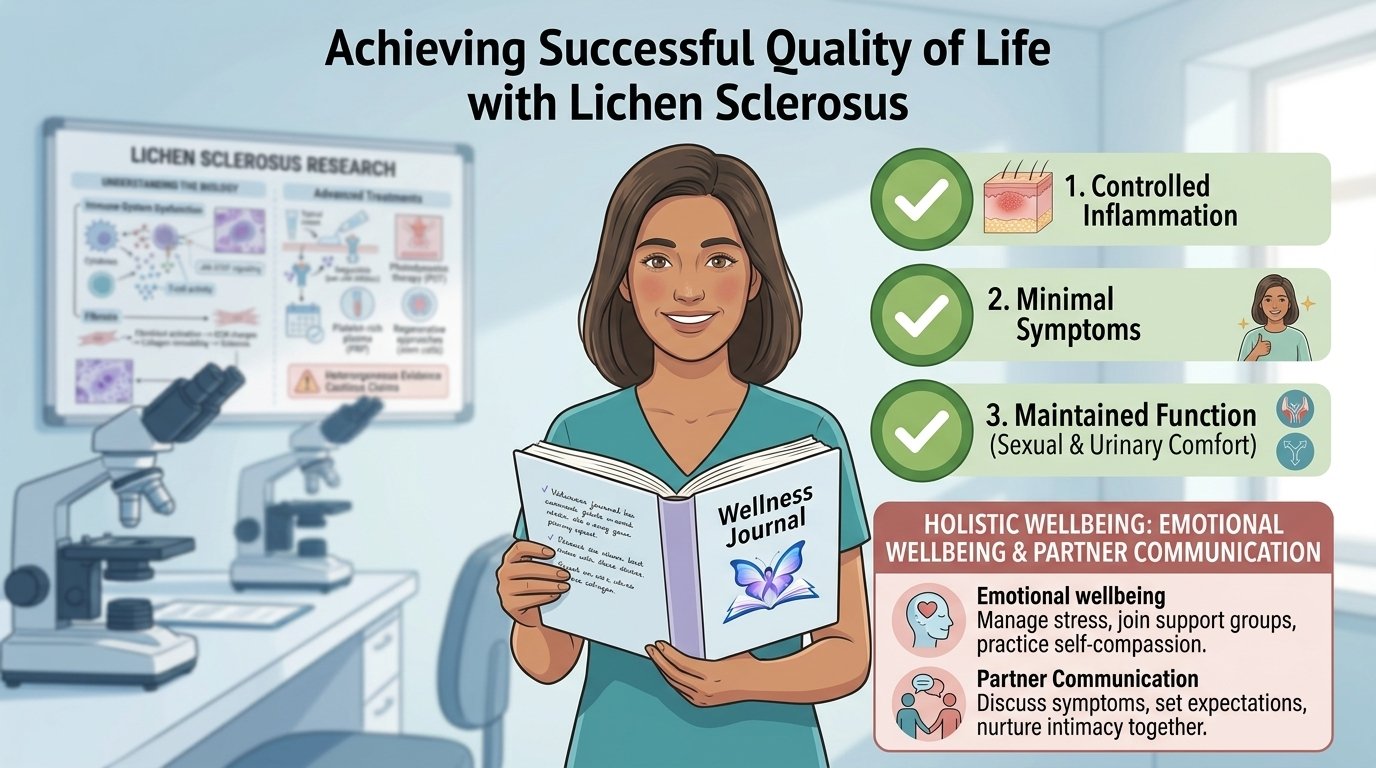
How Does Lichen Sclerosus Affect Quality of Life?
Living with lichen sclerosus can involve physical, emotional and psychological challenges.
Persistent itching, discomfort, changes in genital appearance and concerns about sexual activity can affect confidence and relationships.
Some people may also experience anxiety about disease progression or the possibility of complications.
It is important to recognize that these concerns are legitimate aspects of living with a chronic skin condition.
Helpful approaches may include:
- Discussing sexual health concerns with a healthcare professional.
- Seeking psychological support when anxiety or distress becomes difficult to manage.
- Connecting with reputable patient-support communities.
- Learning about the condition through evidence-based educational resources.
- Maintaining open communication with partners when comfortable.
A comprehensive approach to LS management should consider both physical symptoms and overall quality of life.
For more information, explore our Sexual Health and Healing & Support resources.
When Should You Consult a Healthcare Professional?
Arrange a medical assessment if:
- Your symptoms are worsening or returning.
- Prescribed treatment is not producing the expected improvement.
- You notice a new lump, persistent ulcer, erosion or unusual skin thickening.
- You experience new urinary difficulties.
- Sexual discomfort is affecting your quality of life.
- You are unsure whether your treatment plan is still appropriate.
Depending on your symptoms, assessment may involve a dermatologist, gynecologist, urologist or another healthcare professional experienced in managing lichen sclerosus.
Early assessment of concerning changes is particularly important.
The Importance of Education and Long-Term Support
Understanding lichen sclerosus is an important step toward managing the condition with greater confidence.
People living with LS benefit from knowing how treatment works, why follow-up matters, which symptoms deserve attention and when to seek medical advice.
The Lichen Sclerosus Guidebook provides educational information covering symptoms, diagnosis, treatment, medical research, sexual health, pregnancy and delivery, and ongoing support.
Explore our complete Lichen Sclerosus resources to learn more about the condition and its management.
Knowledge, appropriate medical care and consistent monitoring can help people make informed decisions about living with lichen sclerosus.
Frequently Asked Questions About Living with Lichen Sclerosus
1. Is lichen sclerosus a lifelong condition?
Lichen sclerosus is generally considered a chronic condition. Symptoms can improve significantly with appropriate treatment, but the disease may remain active or recur. Long-term management should be individualized.
2. Can lichen sclerosus become inactive?
Yes. Some individuals experience periods when symptoms and visible inflammation are well controlled. However, symptom improvement does not necessarily mean the condition has permanently disappeared.
3. Do I need regular medical appointments if I have no symptoms?
Possibly. Some people may still require periodic assessment even when symptoms are controlled. Your healthcare professional can recommend an appropriate follow-up schedule based on your condition and treatment history.
4. Can untreated lichen sclerosus cause permanent scarring?
Yes. Persistent inflammation can contribute to scarring and changes in the normal structure of affected skin, particularly in genital areas. Appropriate treatment can help control inflammation and reduce the risk of progression.
5. Does lichen sclerosus increase the risk of cancer?
Genital lichen sclerosus is associated with an increased risk of squamous cell carcinoma. However, most people with LS do not develop cancer. Appropriate treatment, follow-up and assessment of suspicious skin changes are important.
6. Should I stop using steroid ointment when my symptoms disappear?
Not without professional advice. Some individuals need maintenance treatment to keep inflammation under control. Your healthcare professional should determine when and how treatment can be adjusted.
7. Can I manage lichen sclerosus without medication?
Skin-care measures may help reduce irritation, but they are not a substitute for prescribed treatment. Genital LS commonly requires medical management with topical corticosteroids.
8. What should I do if my symptoms return?
Contact your healthcare professional for reassessment. Recurring symptoms may indicate renewed disease activity or another condition that requires attention.
Medical Disclaimer
This article is intended for general educational and informational purposes only. It does not provide medical advice, diagnosis or treatment recommendations for individual circumstances.
Lichen sclerosus can vary significantly between individuals. Always consult a qualified healthcare professional for diagnosis, treatment decisions and follow-up care. Do not change or discontinue prescribed medication without professional guidance.
References and Further Reading
- Lewis FM, et al. British Association of Dermatologists guidelines for the management of lichen sclerosus, 2018. British Journal of Dermatology. 2018;178(4):839–853. https://doi.org/10.1111/bjd.16241
- British Association of Dermatologists. Lichen Sclerosus in Females. Updated September 2026. https://www.bad.org.uk/pils/lichen-sclerosus-in-females
- NHS. Lichen sclerosus. https://www.nhs.uk/conditions/lichen-sclerosus/
- Cambridge University Hospitals. Lichen Sclerosus – After Diagnosis and Initial Treatment. https://www.cuh.nhs.uk/patient-information/lichen-sclerosus-after-diagnosis-and-initial-treatment/
Leave a Reply