


Can you get pregnant if you have lichen sclerosus? Is vaginal delivery possible? Can pregnancy make lichen sclerosus worse, and is treatment safe during pregnancy?
These are important questions for women living with lichen sclerosus (LS), particularly those planning a pregnancy or preparing for childbirth.
Lichen sclerosus does not automatically prevent pregnancy, and most women with the condition can plan for vaginal delivery when there are no other obstetric contraindications. However, pregnancy, childbirth and the postpartum period may require additional attention to disease control, genital skin health and individualized medical care.
Lichen sclerosus is a chronic inflammatory skin condition that commonly affects the vulvar and anogenital areas. Although it is more frequently diagnosed after menopause, it can also affect women of reproductive age.
Pregnancy does not affect every woman with LS in the same way. Some experience improvement in symptoms, while others have persistent or increased inflammation. Symptoms may also change after childbirth.
This guide explores the relationship between lichen sclerosus and pregnancy, including fertility, pregnancy symptoms, medication safety, vaginal delivery, postpartum recovery and breastfeeding.
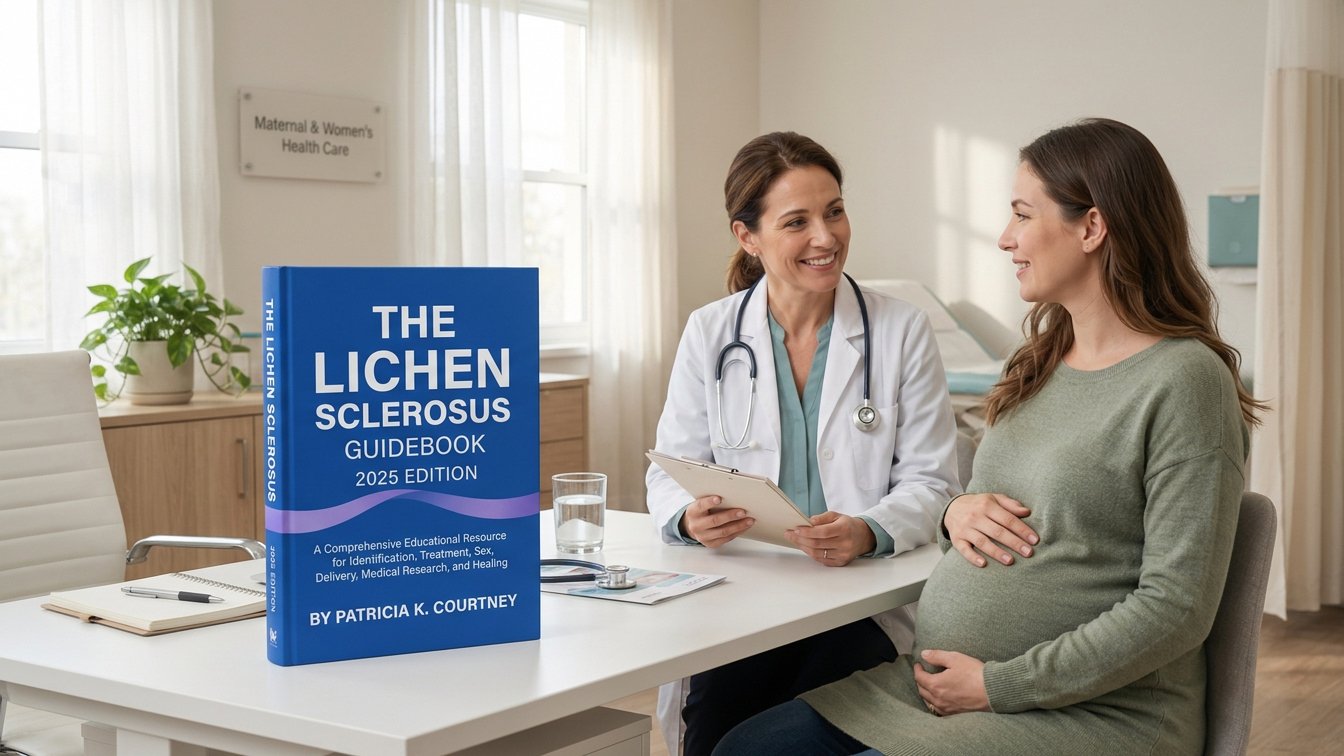
What Is Lichen Sclerosus, and Can It Affect Pregnancy?
Lichen sclerosus is a chronic inflammatory skin condition that most commonly affects the genital and perianal skin. In women, it often involves the vulva, including the labia and surrounding tissues.
The condition may cause:
- White or pale patches of skin.
- Persistent itching and irritation.
- Burning or soreness.
- Fragile skin and small cracks.
- Pain during sexual activity.
- Scarring and changes in vulvar anatomy.
Lichen sclerosus can occur during the reproductive years, meaning a diagnosis does not necessarily prevent someone from becoming pregnant.
However, genital discomfort, scarring and pain during intercourse can affect sexual wellbeing and may create additional challenges for some women planning a pregnancy.
Pregnancy itself does not have a predictable effect on LS. The disease may improve, remain stable or become more symptomatic.
For this reason, women with lichen sclerosus should discuss pregnancy planning and treatment with their dermatologist or gynecologist.
Can You Get Pregnant If You Have Lichen Sclerosus?
Yes. Most women with lichen sclerosus can become pregnant.
There is currently no established evidence that vulvar lichen sclerosus directly causes infertility.
The condition primarily affects the external genital skin rather than the reproductive organs responsible for conception. The vagina and cervix are generally not affected by typical vulvar lichen sclerosus.
However, some indirect challenges may occur.
For example:
- Persistent vulvar pain may make sexual intercourse uncomfortable.
- Fissures or skin irritation may cause pain during intimacy.
- Scarring or narrowing around the vaginal opening may affect sexual comfort.
- Anxiety about symptoms or pregnancy may affect sexual wellbeing.
These factors may make conception more difficult for some individuals without meaning that LS itself causes infertility.
Women experiencing painful intercourse or significant vulvar scarring should seek assessment from a healthcare professional experienced in vulvar conditions.
If pregnancy does not occur despite regular attempts, a separate fertility assessment may be appropriate.
Can Lichen Sclerosus Affect Pregnancy Symptoms?
Pregnancy can influence the symptoms of lichen sclerosus, but the response varies between individuals.
Hormonal and physiological changes during pregnancy may coincide with changes in skin symptoms. However, the exact relationship between pregnancy hormones and LS disease activity is not fully understood.
Some women report:
- Reduced itching.
- Less vulvar irritation.
- Improved skin comfort.
- Stable disease activity.
- Increased itching or burning.
- New or persistent skin irritation.
The 2024 EuroGuiDerm guideline reports that lichen sclerosus generally does not worsen during pregnancy and may improve in many women.
However, individual experiences differ, and symptom improvement should not be interpreted as proof that the disease has disappeared.
What Does Research Say About Lichen Sclerosus During Pregnancy?
A 2023 retrospective cross-sectional survey published in BJOG examined pregnancy and childbirth experiences among women with vulvar lichen sclerosus.
The study included 134 respondents and 206 pregnancies.
Among the reported findings:
- Symptoms decreased during 44% of pregnancies.
- Symptoms increased during the postpartum period in 60% of pregnancies.
- Approximately 67% of the reported pregnancies resulted in vaginal birth.
- Half of the respondents reported anxiety about childbirth because of LS.
The study also found that many participants felt they had received insufficient information about managing lichen sclerosus during pregnancy.
These findings provide useful insight into patient experiences, but the study was based on an online survey and should not be treated as a definitive prediction of what will happen in every pregnancy.
Is Lichen Sclerosus Dangerous During Pregnancy?
Lichen sclerosus does not automatically make a pregnancy high-risk.
Many women with LS experience uncomplicated pregnancies. However, active inflammation, significant vulvar scarring and changes in genital anatomy may require additional assessment.
Important considerations include:
- Whether symptoms are adequately controlled.
- Whether the vulvar skin has significant scarring.
- Whether the vaginal opening is narrowed.
- Whether intercourse or physical examination causes pain.
- Whether the current treatment plan is appropriate during pregnancy.
A coordinated approach involving an obstetrician, gynecologist and dermatologist can help ensure that both pregnancy care and LS management are addressed.
Lichen sclerosus should not be ignored simply because pregnancy has begun.
Is Lichen Sclerosus Treatment Safe During Pregnancy?
Treatment decisions during pregnancy should be made with a qualified healthcare professional.
The goal is to control inflammation while selecting an appropriate medication, potency and application schedule.
1. Topical Corticosteroids
Topical corticosteroids are the standard first-line treatment for genital lichen sclerosus.
Medications such as clobetasol propionate 0.05% are commonly used outside pregnancy.
During pregnancy, a healthcare professional may review the treatment plan and consider the minimum effective potency and frequency needed to maintain disease control.
The 2025 German S3 guideline on lichen sclerosus recommends maintenance treatment during pregnancy with a potent topical glucocorticoid, such as mometasone furoate, tailored to disease control.
A 2026 review published in The Obstetrician & Gynaecologist also discusses continuing appropriate topical corticosteroid treatment throughout pregnancy and the postpartum period.
Important considerations include:
- Use only medication prescribed or approved by your healthcare professional.
- Follow the recommended application instructions.
- Do not stop effective treatment without discussing it with your clinician.
- Inform your dermatologist and obstetrician about all medications you use.
2. Emollients and Gentle Skin Care
Supportive skin care may help reduce irritation and improve comfort.
Healthcare professionals may recommend suitable emollients or barrier preparations.
General measures include:
- Avoiding fragranced soaps and harsh cleansing products.
- Choosing gentle, non-irritating skin-care products.
- Avoiding excessive rubbing or friction.
- Wearing comfortable clothing.
- Following professional guidance on vulvar skin care.
These measures can support symptom management but do not replace prescribed LS treatment.
3. Treatments That Require Particular Caution
Not every treatment used for lichen sclerosus is appropriate during pregnancy.
For example, topical retinoids should not be used during pregnancy. Topical calcineurin inhibitors also require specialist review and are generally not recommended during pregnancy or breastfeeding in the relevant European guidance.
Never begin a new LS medication or use an alternative treatment without discussing pregnancy safety with your healthcare professional.
Can You Have a Vaginal Birth With Lichen Sclerosus?
Yes. Lichen sclerosus is not automatically a reason to have a cesarean section.
The 2025 German S3 clinical guideline recommends vaginal delivery for women with lichen sclerosus when there are no other contraindications.
The 2026 review by Lewis, Lev-Sagie and Krapf also explains that the mode of birth can generally be planned according to standard obstetric indications.
However, the condition of the vulvar skin and the extent of scarring may be relevant when planning childbirth.
What Factors Should Be Considered Before Vaginal Delivery?
An individualized assessment may consider:
- Whether LS is well controlled.
- Whether significant vulvar scarring is present.
- Whether the vaginal opening has become narrowed.
- Whether there is active inflammation or painful fissuring.
- Whether previous childbirth caused significant perineal injury.
- Other obstetric factors affecting delivery.
A woman with well-controlled LS and no significant anatomical complications may be able to have a vaginal birth.
However, women with substantial scarring, narrowing or persistent symptoms may need additional specialist assessment and a more detailed birth plan.
Does Lichen Sclerosus Increase the Risk of Perineal Tears?
This is an important area of emerging research.
A study published online in October 2026 in the American Journal of Obstetrics and Gynecology investigated birth-related perineal tears among women with vulvar lichen sclerosus.
The researchers examined 277 birth records involving women with LS and compared them with 533 control records.
After adjustment for relevant obstetric factors, the researchers reported:
- An increased risk of second-degree perineal tears.
- An increased risk of obstetric anal sphincter injuries.
- Associations between more severe injuries and factors including narrowing of the vaginal opening and LS symptoms during pregnancy.
The reported relative risk for obstetric anal sphincter injury was 3.37 compared with the control group.
These findings are important, but they come from an observational study conducted in one geographical region. They do not establish that every woman with LS will experience a perineal tear or require cesarean delivery.
They do support the importance of discussing vulvar anatomy, symptoms and delivery planning with an experienced obstetric team.
The practical takeaway: Vaginal delivery may be appropriate, but individual risk assessment should not be overlooked.
Should Women With Lichen Sclerosus Have a Cesarean Section?
Not routinely.
A cesarean section should not be recommended solely because a woman has a diagnosis of lichen sclerosus.
The decision should consider:
- The severity of LS.
- Existing vulvar scarring.
- The degree of introital narrowing.
- Obstetric history.
- The overall health of the mother and baby.
- Standard obstetric indications.
For some women, vaginal delivery may be appropriate. For others, a cesarean section may be recommended for obstetric or individualized clinical reasons.
The best approach is to discuss the options with the obstetrician before delivery rather than making assumptions based on the LS diagnosis alone.
What Happens to Lichen Sclerosus After Childbirth?
The postpartum period deserves particular attention.
Some women experience a return or increase in LS symptoms after giving birth, even when symptoms improved during pregnancy.
Possible symptoms include:
- Increased vulvar itching.
- Burning or irritation.
- New skin sensitivity.
- Pain around the perineal area.
- Persistent fissures.
- Discomfort during sexual activity.
- Changes in existing white patches.
A 2023 survey reported increased symptoms during the postpartum period in 60% of pregnancies included in the study.
However, this finding should be interpreted cautiously because it was based on self-reported experiences rather than a population-wide clinical trial.
Postpartum symptoms may also have causes other than LS, including:
- Perineal tears or healing wounds.
- Infection.
- Irritation from sanitary products.
- Hormonal changes.
- Breastfeeding-associated vulvovaginal dryness.
- Other inflammatory skin conditions.
Not every postpartum symptom represents a flare of lichen sclerosus.
A healthcare professional can help distinguish active LS from other postpartum conditions.
Can You Breastfeed If You Have Lichen Sclerosus?
Yes. Vulvar lichen sclerosus does not ordinarily prevent breastfeeding.
The condition generally affects the genital skin rather than the breast tissue involved in milk production.
However, postpartum treatment requires appropriate medication advice.
If topical corticosteroids are being used on the vulvar area:
- Follow the prescribed application instructions.
- Wash your hands after applying medication.
- Avoid transferring medication to the breast or nipple.
- Discuss any medication concerns with your doctor or pharmacist.
The 2026 obstetric review discusses continued appropriate topical corticosteroid treatment during the postpartum and breastfeeding periods.
The suitability of any specific medication depends on its formulation, application site and clinical circumstances.
Can Hormonal Changes After Pregnancy Affect Lichen Sclerosus?
Hormonal changes after childbirth can influence genital comfort and tissue sensitivity.
Breastfeeding may be associated with lower estrogen levels, which can contribute to vaginal dryness and discomfort in some women.
These symptoms may overlap with those experienced by women with lichen sclerosus.
However, postpartum dryness is not the same as an LS flare.
A healthcare professional should assess persistent symptoms to identify their cause.
In selected postpartum patients, a clinician may consider additional treatment for hormonal or atrophic symptoms. Any such treatment should be individualized, especially during breastfeeding.
How Can Women Prepare for Pregnancy With Lichen Sclerosus?
Planning ahead can help women manage their condition more confidently.
Consider the following steps:
1. Arrange a Pre-Pregnancy Medical Review
Discuss your LS diagnosis, symptoms and current treatment with your dermatologist or gynecologist before trying to conceive.
2. Review Your Medication
Make sure your healthcare professional knows about every prescribed or non-prescribed treatment you use.
Ask whether any medication needs to be changed before conception or during pregnancy.
3. Assess Existing Scarring
If you have significant vulvar scarring, tightness or painful intercourse, discuss whether additional treatment or assessment is needed.
4. Establish a Pregnancy Care Plan
Inform your obstetrician about your LS diagnosis early in pregnancy.
This allows the medical team to consider disease control, genital skin health and delivery planning.
5. Plan Postpartum Follow-Up
Discuss when your next LS assessment should take place after childbirth.
Having a follow-up plan can help identify symptom recurrence or other postpartum concerns.
Questions to Ask Your Doctor About Lichen Sclerosus and Pregnancy
Women preparing for pregnancy or childbirth may find it useful to discuss these questions with their healthcare team:
- Is my lichen sclerosus adequately controlled before pregnancy?
- Should my current medication or treatment frequency change?
- Is my vulvar scarring likely to affect vaginal delivery?
- Do I need an additional assessment of the vaginal opening?
- What symptoms should I report during pregnancy?
- Which medications are appropriate during pregnancy and breastfeeding?
- When should I schedule postpartum follow-up?
- What should I do if my symptoms worsen after childbirth?
These discussions can help create a coordinated plan based on individual medical needs.
Frequently Asked Questions About Lichen Sclerosus and Pregnancy
1. Can lichen sclerosus cause infertility?
There is no established evidence that vulvar lichen sclerosus directly causes infertility. However, pain during intercourse and significant genital scarring may create indirect difficulties for some women trying to conceive.
2. Can I get pregnant naturally if I have vulvar lichen sclerosus?
Yes. Many women with vulvar LS can conceive naturally. A diagnosis alone does not mean that fertility is impaired.
3. Does lichen sclerosus usually improve during pregnancy?
Some women experience improvement, while others remain stable or develop increased symptoms. The 2024 EuroGuiDerm guideline notes that LS often follows a favourable course during pregnancy, but individual responses vary.
4. Can lichen sclerosus harm an unborn baby?
There is no established evidence that vulvar lichen sclerosus itself directly harms the unborn baby. However, medication safety should always be reviewed with a healthcare professional.
5. Is clobetasol safe during pregnancy?
Topical corticosteroid treatment may be continued when clinically appropriate. The choice of potency, amount and frequency should be reviewed by a healthcare professional. Some pregnancy guidelines favour a potent corticosteroid such as mometasone for maintenance treatment.
6. Can women with lichen sclerosus have normal vaginal delivery?
Yes. Vaginal delivery is generally possible when there are no other contraindications. However, significant scarring, narrowing of the vaginal opening and active symptoms may require individualized obstetric assessment.
7. Does lichen sclerosus increase the risk of perineal tears?
Emerging 2026 observational research suggests an association between vulvar LS and increased risks of certain perineal injuries during vaginal birth. Further research is needed, and individual risk should be assessed by an obstetric team.
8. Can lichen sclerosus flare up after childbirth?
Yes. Some women experience increased symptoms after childbirth. Persistent itching, burning or new skin changes should be evaluated to determine whether they represent an LS flare or another postpartum condition.
9. Can I breastfeed while receiving lichen sclerosus treatment?
In many cases, yes. Appropriate topical treatment may be continued during breastfeeding under medical guidance. Medication should be used according to professional instructions, and transfer to the breast or nipple should be avoided.
10. Should I stop lichen sclerosus treatment when I become pregnant?
No. Do not stop prescribed treatment without consulting your healthcare professional. Uncontrolled inflammation may also create problems, so an appropriate pregnancy treatment plan is important.
Final Thoughts: Pregnancy and Lichen Sclerosus Can Be Managed Together
A diagnosis of lichen sclerosus does not mean that pregnancy or motherhood is out of reach.
Many women with LS can conceive, experience uncomplicated pregnancies and deliver vaginally. Nevertheless, the condition deserves appropriate attention throughout pregnancy and after childbirth.
The most important considerations are maintaining disease control, reviewing medication safety, assessing significant scarring and planning delivery with an informed obstetric team.
Newer research is also helping healthcare professionals understand the relationship between vulvar lichen sclerosus and childbirth-related complications.
With appropriate information, individualized treatment and coordinated medical care, women can make informed decisions about pregnancy, delivery and postpartum recovery.
The Lichen Sclerosus Guidebook aims to make reliable educational information about lichen sclerosus more accessible to individuals and families navigating the condition.
Explore our additional resources on Lichen Sclerosus Treatment, Sexual Health and Healing & Support.
Medical Disclaimer
This article is intended for general educational and informational purposes only. It does not provide medical advice, diagnosis or treatment recommendations for individual circumstances.
Pregnancy and lichen sclerosus management should be individualized. Always consult a qualified dermatologist, gynecologist or obstetrician before changing medication, planning treatment or making decisions about childbirth.
Do not discontinue prescribed medication without professional advice.
Medical References and Further Reading
- Kirtschig G, Günthert A, Kinberger M, et al. Lichen sclerosus. Part 1. Guideline of the DGG, DGGG, OEGGG and SGGG (S3-Level, AWMF Registry No. 013-105, July 2025). Geburtshilfe Frauenheilkd. 2026;86(8):693–719. https://doi.org/10.1055/a-2871-3377
- Lewis FM, Lev-Sagie A, Krapf J. Lichen Sclerosus for the Obstetrician: A Review of Comprehensive Care for Pregnancy, Parturition, Post-Partum and Breastfeeding. The Obstetrician & Gynaecologist. 2026;28(2):93–99. https://doi.org/10.1111/tog.70032
- Andersen CH, Sloth RB, Schmidt Arenholt LT, et al. Vulvar Lichen Sclerosus as a Risk Factor for Birth-related Perineal Tear. American Journal of Obstetrics and Gynecology. Published online October 7, 2026. https://doi.org/10.1016/j.ajog.2026.10.004
- Shaffer AB, Cigna ST, Pope R, Krapf JM. Pregnancy, Parturition and Postpartum Considerations Among Patients With Vulvar Lichen Sclerosus: A Retrospective Cross-Sectional Online Survey. BJOG. 2024;131(3):327–333. https://doi.org/10.1111/1471-0528.17601
- Kirtschig G, Kinberger M, Kreuter A, et al. EuroGuiDerm Guideline on Lichen Sclerosus—Introduction into Lichen Sclerosus. Journal of the European Academy of Dermatology and Venereology. 2024;38(10):1850–1873. https://doi.org/10.1111/jdv.20082
Leave a Reply